Capbase (Deel) built a scalable React website with visual editing for the marketing team
Enabling developers to stay in control while allowing the marketing team to manage content and publish updates independently.
About Capbase
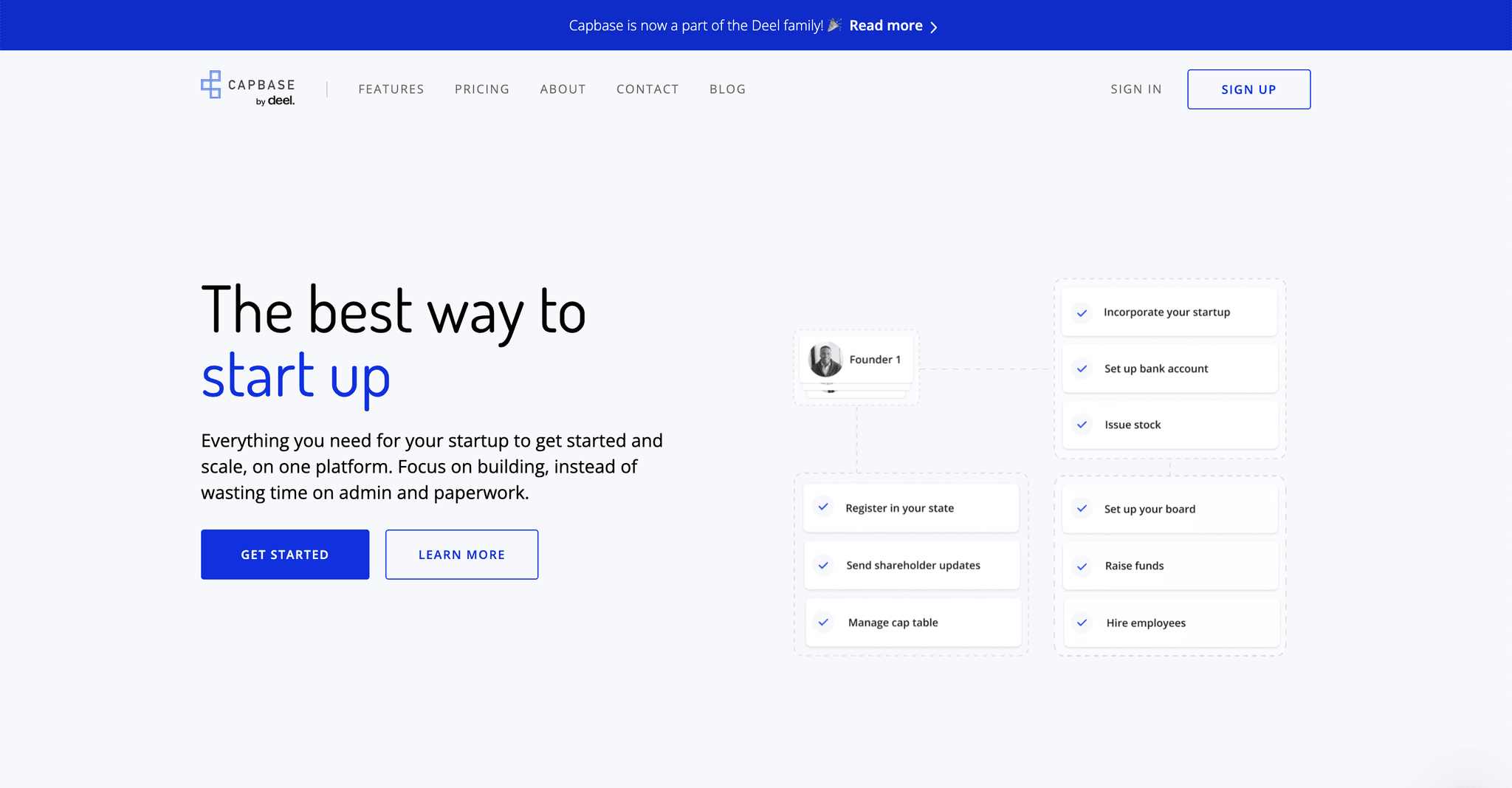
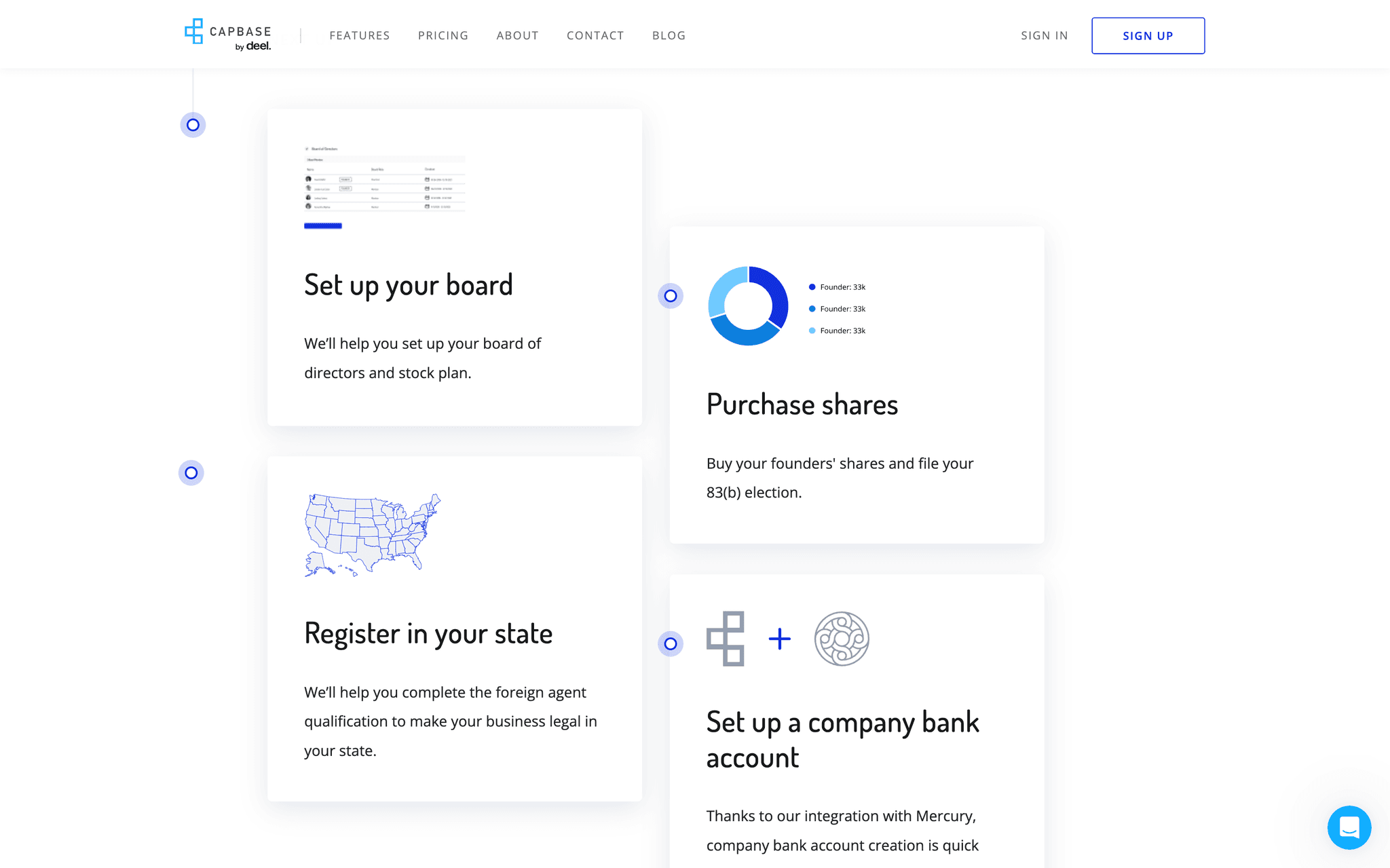
Capbase is a platform that helps startups launch and manage their companies, from incorporation to compliance and fundraising. It was later acquired by Deel, a global leader in payroll and compliance solutions.
The challenge
Capbase needed a solution that would allow its development team to build a fully custom website using React, while giving the marketing team autonomy to manage content.
A key goal was to enable frequent updates, especially for content-heavy sections like the blog, without requiring developer involvement, so the team could move faster and focus on growth.
Discovery and decision
Capbase selected React Bricks for its ability to combine a fully React-based architecture with a visual editing experience for content teams. This made it possible to build a custom frontend while enabling non-technical users to manage content independently.
This balance allowed the development team to focus on product features, while the marketing team could publish and update content without friction.
“React Bricks allowed us to build a website that supports our business goals while remaining easy to maintain.”

Stefan Nagey
Senior Director of Engineering @ Deel
Implementation
Capbase implemented React Bricks within a custom React setup, integrating it seamlessly into their existing architecture. This approach allowed the team to maintain full control over the frontend while adding a visual editing layer for content management.
The flexibility of React Bricks made it possible to adapt to their technical requirements without being tied to a specific framework
Results
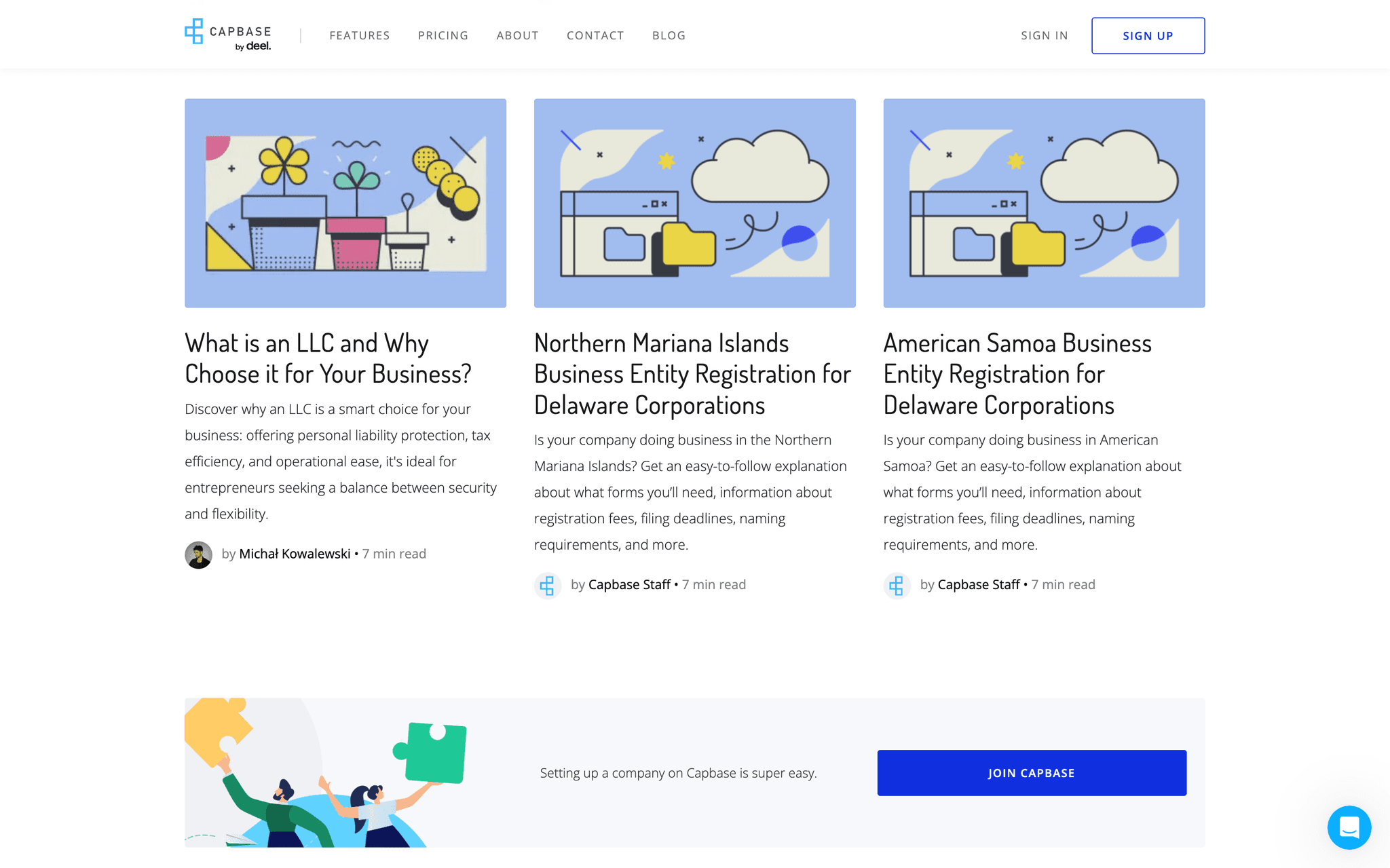
The new website provides a modern and scalable foundation for both product communication and content marketing. With React Bricks, the marketing team can manage and publish content independently, improving speed and consistency across the website.
The blog, in particular, plays a key role in supporting SEO and driving organic growth, enabled by a flexible and structured content system.